
Generic vs Site-Specific SWMS: What’s the Difference and Why It Matters
Generic SWMS templates are not the problem. Relying on them without ever tailoring them is. Here is the difference, and where the line sits under Queensland law.
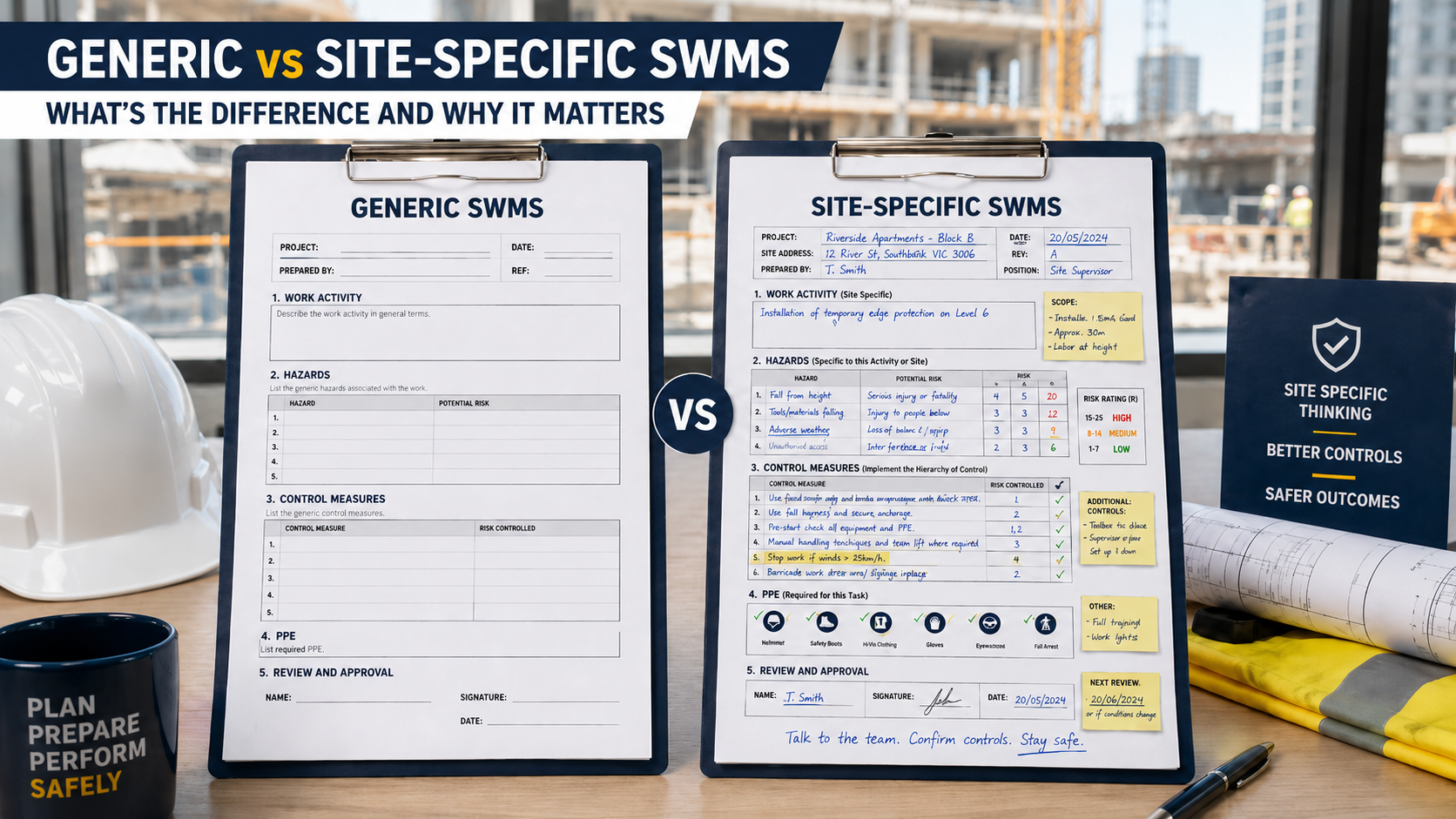
What a generic SWMS is
A generic SWMS is a standard document prepared for a work activity that is carried out regularly. WorkSafe Queensland accepts these are useful: the content can be refined over years and developed in consultation with workers. It is a legitimate, sensible starting point.
Why generic-only fails
The catch is in the same guidance: before each new activity, the generic SWMS must be reviewed and revised so that it applies to the actual high-risk construction work and the actual workplace. That is because s.299 of the Work Health and Safety Regulation 2011 (Qld) requires the SWMS to account for the circumstances at the workplace that may affect how the work is done.
A template cannot know your site — the access, the other trades, the weather, the live services, the specific plant on the day. If the SWMS does not reflect those, it may not be effective, and it will not hold up under scrutiny.
How to take a generic SWMS site-specific
Walk the site. Look at the actual conditions before the work starts.
Adjust the hazards. Add what is real for this site and remove what does not apply.
Make the controls match. Tie each control to the actual access, plant, services and layout on the day.
Consult the crew. Talk to the workers doing this job, on this site, and record it.
Date and review. Set the date, note the review point, and revise if conditions change.
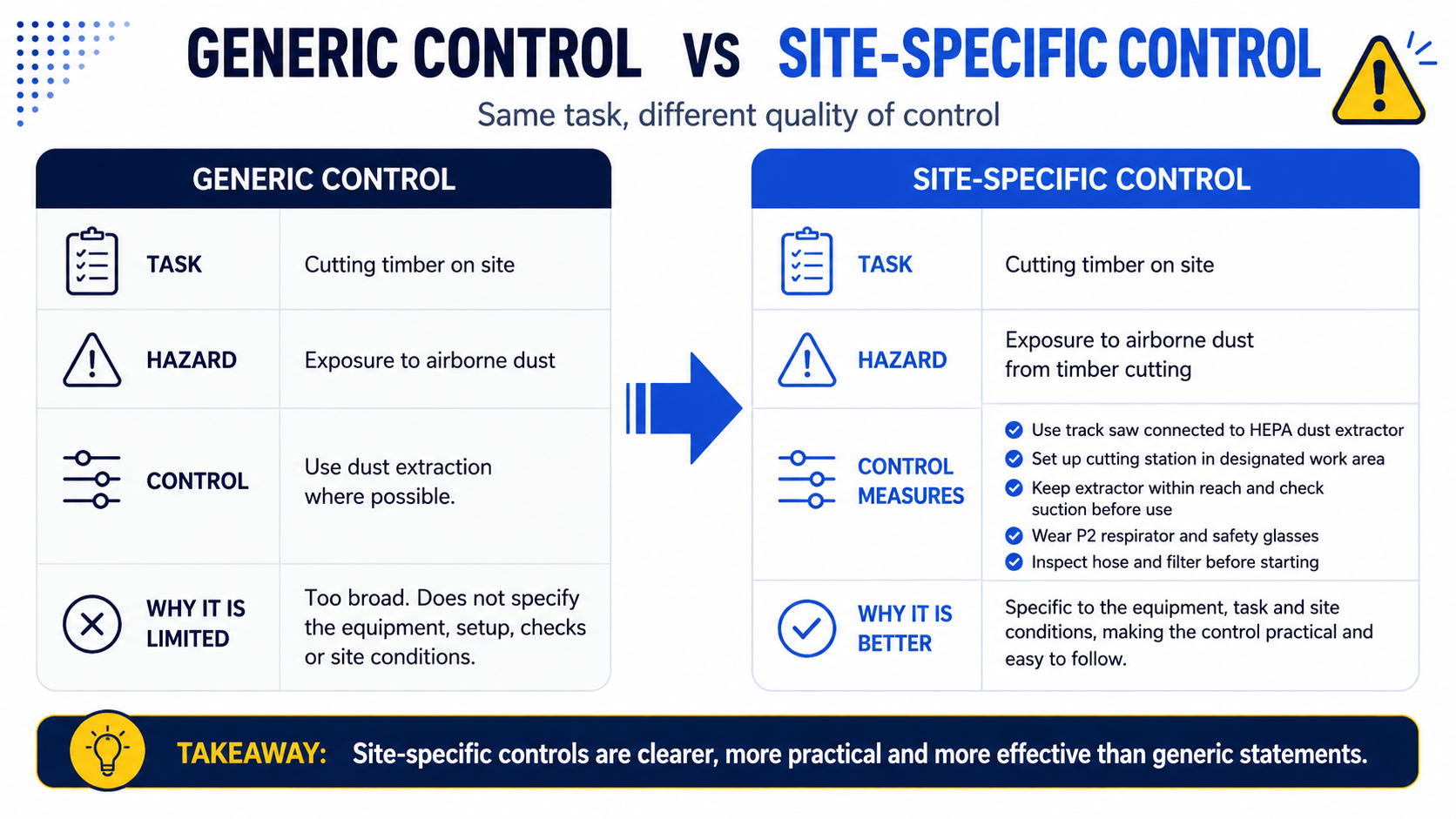
The simple test
Read the SWMS as if you had never seen the site. If it could describe any job anywhere, it is still generic. If it could only describe this job, on this site, with this crew and this plant, it is site-specific — and that is what the law expects.
Check out our article “8 Reasons Your SWMS Would Fail an Audit” for mor information.
Check out our article “How to Write a SWMS: Step-by-Step Guide” for mor information.
Sources and further reading
WorkSafe Queensland – Safe work method statements — https://www.worksafe.qld.gov.au/resources/guides/safe-work-method-statements
Work Health and Safety Regulation 2011 (Qld) — https://www.legislation.qld.gov.au/view/html/inforce/current/sl-2011-0240
Safe Work Australia – SWMS for high risk construction work (information sheet) — https://www.safeworkaustralia.gov.au/resources-and-publications/guidance-materials/safe-work-method-statement-high-risk-construction-work-information-sheet
Need help with your SWMS?
Squire Safety Consultants helps Queensland businesses with SWMS development, WHS documentation, safety management systems and practical workplace safety support — clear, compliant and usable documents that workers will actually follow.
If you would like help getting your SWMS right, get in touch Here
Need a template as a staring point? pick up a Free SWMS Template Here