
EDITABLE WORD DOCUMENTS
Construction SWMS Templates
Editable Word Safe Work Method Statement templates for construction, civil works, road work and other high-risk construction activities. Built to give contractors and small businesses a practical starting point without writing every document from scratch.
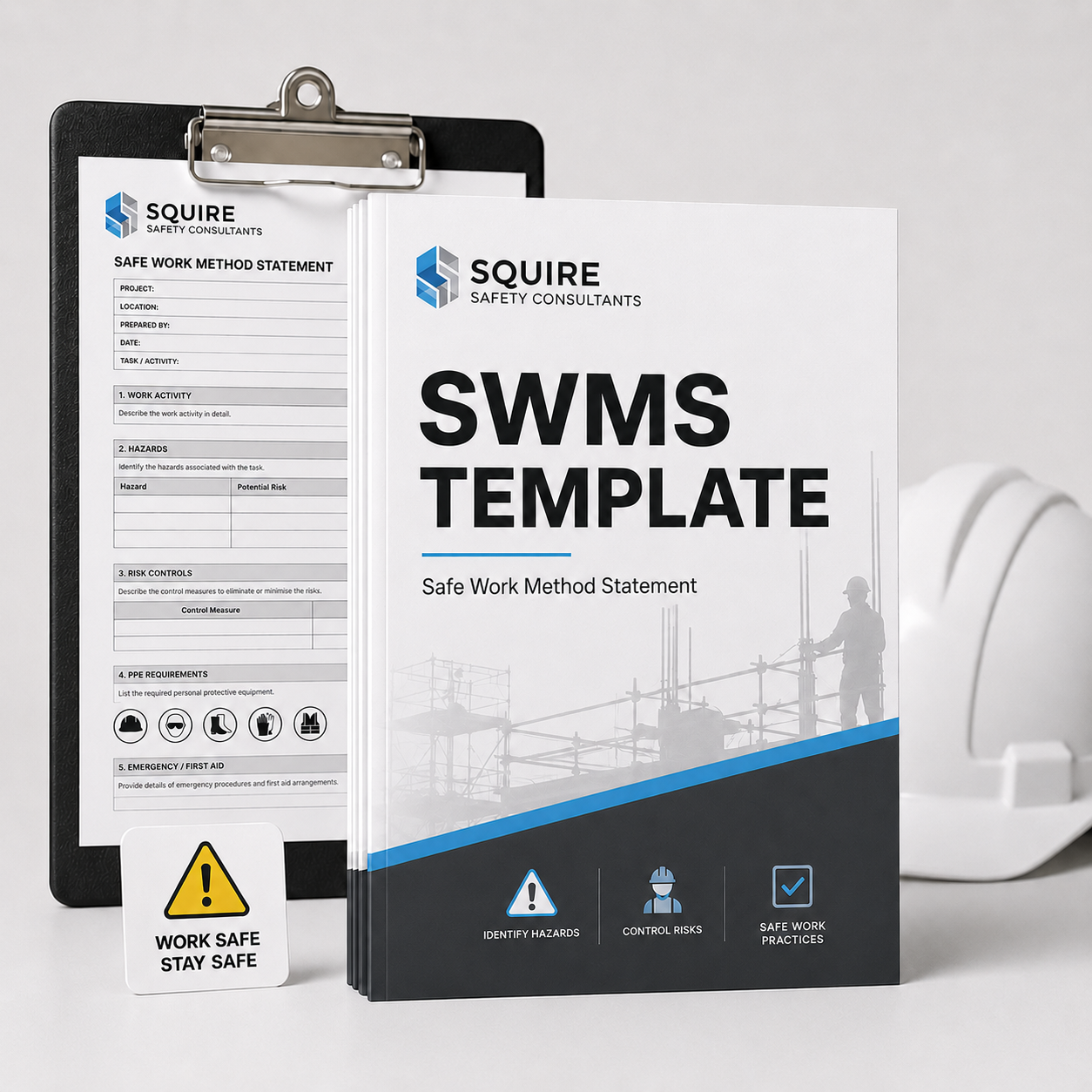
Important — customise before use
These SWMS templates are pre-filled to save time, but they are not a substitute for reviewing the actual work. Before use, update the SWMS to suit your site conditions, task steps, plant and equipment, workers, hazards, control measures and principal contractor requirements.
What is a SWMS?
A Safe Work Method Statement, or SWMS, is a document used for high-risk construction work. It sets out the high-risk construction work being completed, the hazards and risks that may arise from the work, and the control measures that will be used to manage those risks.
A SWMS should be specific enough to help workers and supervisors understand how the high-risk work will be controlled on the actual job.
Best suited for
Small contractors and subcontractors
Sole traders performing high-risk construction work
Businesses preparing site documentation packs
Companies responding to principal contractor requirements
Businesses building a practical WHS document library
BROWSE BY HIGH-RISK CONSTRUCTION WORK ACTIVITY
Select the construction SWMS category below to view available templates. Each document is supplied as an editable Word template and should be reviewed and customised before use to suit the site, task and crew.
Available construction SWMS templates
-
-
Tower Inspection, Painting & Structural Repair SWMS Template
Tower Earthing & Lightning Protection SWMS Template
Tower Rigging & Hoisting SWMS Template
-
-
-
-
-
USING THE TEMPLATES PROPERLY
How to use these SWMS templates
Review the task
Check the work steps against the
actual job, site conditions, plant, equipment and workers involved.
Customise the controls
Update hazards, risks and control measures so they match what will actually be used on site.
Communicate the SWMS
Make sure workers understand the SWMS, sign on where required and
know what controls apply.
Review when work changes
Revise the SWMS if the task, site conditions, hazards or control
measures change.
Need SOPs as well as SWMS?
An SOP can support your SWMS by explaining how a task, tool or item of plant
should be used or managed safely as part of your broader WHS system.
COMMON QUESTIONS
SWMS template FAQs
-
A SWMS is a Safe Work Method Statement used for high-risk construction work. It identifies the high-risk work, the hazards and risks, and the control measures used to manage those risks.
-
A template can be used as a starting point, but it should be reviewed and amended to suit the specific workplace, work environment, workers and control measures.
-
No. A SWMS is used for high-risk construction work. An SOP generally explains how a task or item of plant should be operated or completed safely. A JSA usually breaks a job into steps, hazards and controls.
-
A SWMS is required before high-risk construction work starts. The SWMS should be prepared before the work is carried out and made available to the workers involved.
-
Yes. The templates are supplied as editable Word documents so they can be customised to suit the site, task, crew and control measures.
-
If you are unsure whether the template matches the actual work, site conditions or principal contractor requirements, it should be reviewed before use.
Need help choosing or customising the right SWMS?
If you are unsure which SWMS applies, or you need a document tailored to a specific site, task or principal contractor requirement, you can request support from Squire Safety Consulting.