
The change from Workplace Exposure Standards (WES) to Workplace Exposure Limits (WEL) from 1 December 2026, and what it means for SMEs
Workplace Exposure Limits 2026: What the New WEL List Means for Your Business
If your business creates dust, fume, vapour or mist, a national change lands on 1 December 2026 that is worth getting on your radar now. Australia is replacing the Workplace Exposure Standards (WES) with a renamed Workplace Exposure Limits (WEL) list, and the shift is easy to underestimate.
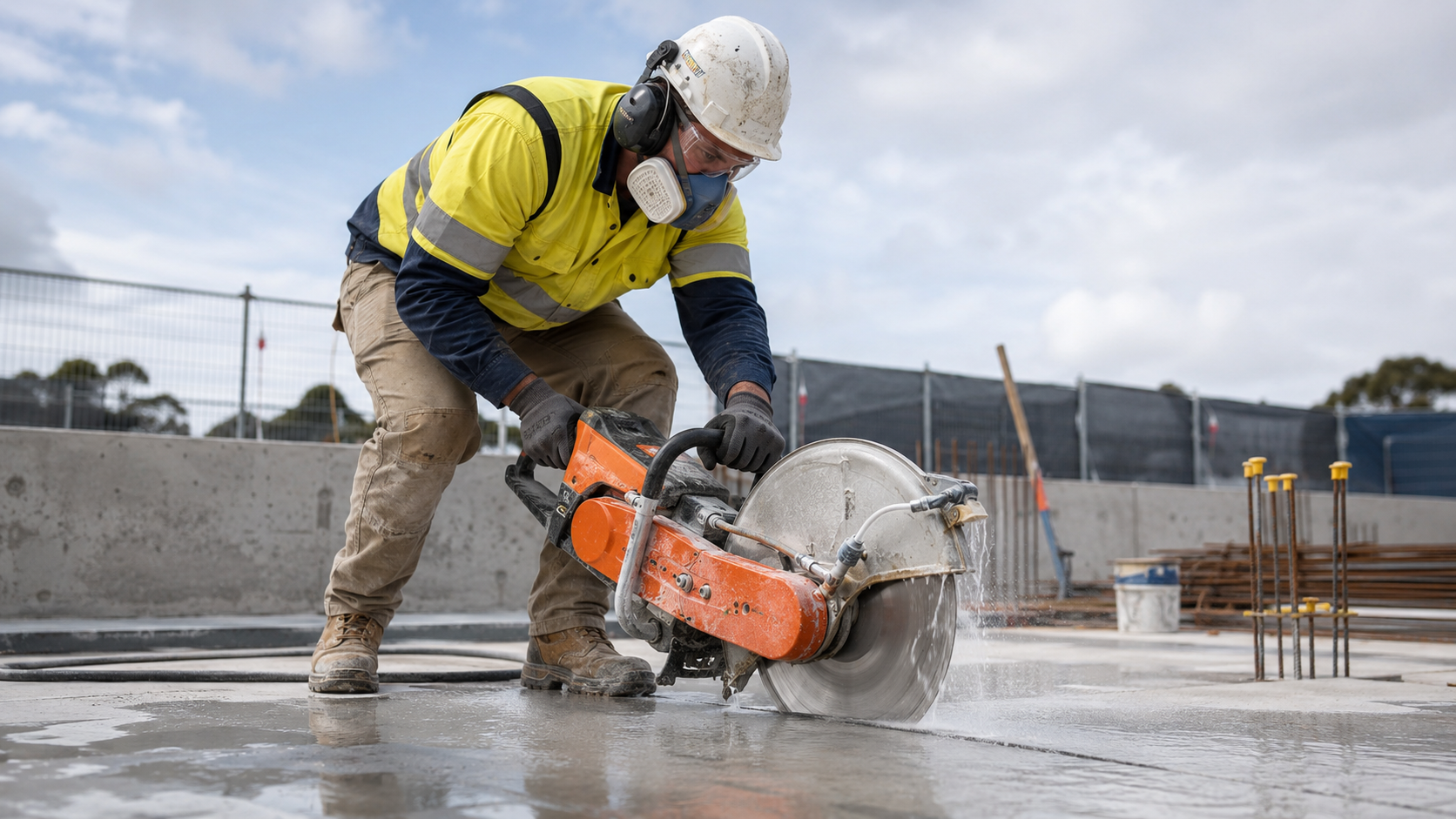
This is written for Queensland small and medium businesses in trades, workshops, civil and construction: the people cutting concrete, welding, grinding and spraying, where airborne contaminants are part of the daily job. Here is what is actually changing, what is not, and the practical steps worth taking before the date.
The WES list has set the legal ceilings for airborne contaminants since 1995. After a long, health-based review, work health and safety ministers agreed to replace it with the new workplace exposure limits from 1 December 2026.
The short version
Here is the change in plain terms:
▪ From 1 December 2026, the WEL list replaces the WES list across Australia.
▪ The name change is deliberate. A limit is a level that must not be exceeded, which also aligns Australia with terms used internationally.
▪ Most exposure limits are unchanged. The review lowered some, raised a few, and added or removed others.
▪ The WEL only becomes legally binding in your business once your jurisdiction writes it into its WHS regulations. Until then, the WES still applies.
Key point: A workplace exposure limit is a ceiling, not a safe target. Being under the number has never been the whole duty. You must still eliminate or minimise exposure so far as is reasonably practicable.
What this actually changes for an SME
On paper, less than the headlines suggest. Your core duty does not change. What changes is the set of numbers behind it, and the fact that some of those numbers have moved.
The trap is assuming. Because some limits fell, some rose, and some substances were added or removed, you cannot assume everything tightened, and you cannot assume nothing changed. The only safe approach is to check the WEL list against the specific contaminants your work produces.
The substances most likely to catch you out
Welding fume
This one is already live, independent of the 2026 date. The exposure standard for welding fume (not otherwise classified) was cut from 5 mg/m3 to 1 mg/m3 as an eight-hour average, and that reduced figure carries into the WEL.
A fivefold cut is significant. Ventilation that passed under the old standard often will not hold at the lower one, so relying on natural airflow, or on a respirator alone without engineering controls, is unlikely to satisfy an inspector. Individual components of welding fume carry their own limits too, so the composition of the fume matters, not just the total.
Respirable crystalline silica
Silica remains one of the most closely watched contaminants in the country. The current exposure standard is 0.05 mg/m3 as an eight-hour average, and respirable silica is generated whenever you cut, grind, drill or polish concrete, stone, brick or tile.
Here is the nuance the headlines miss: silica is one of nine substances Safe Work Australia has been asked to analyse further before its final WEL value is set, so the exact new number is not yet settled. Plan for the possibility of a tighter figure rather than treating any specific lower number as confirmed.
Separately, the dedicated silica duties in the WHS Regulations continue regardless of the WEL change: risk assessment, a silica control plan, worker training, air monitoring and health monitoring. The transition to the WEL does not pause any of that.
The non-threshold genotoxic carcinogens
A group of 33 airborne contaminants are classed as non-threshold genotoxic carcinogens, which means there is no known safe level of exposure. Safe Work Australia is still working out how to regulate these under the model laws, and businesses must keep complying with the existing WES values for them until 1 December 2026. Treat this as a watch item, not something to action yet.
What Queensland businesses should do before December 2026
1. List the airborne contaminants your work actually produces: dusts, fumes, gases, vapours and mists.
2. Check each one against the WEL list, rather than assuming the change is all tighter or all the same.
3. Refresh your air monitoring. If you weld and your last monitoring predates the welding fume cut, that data is out of date for both the current and the incoming limit.
4. Strengthen engineering controls first: local exhaust ventilation, on-tool dust extraction and wet cutting. These sit above respirators in the hierarchy of control.
5. Keep your silica duties running, and plan controls that could cope with a lower silica limit if one is confirmed.
6. Talk to your workers and health and safety representatives about what is changing and what it means for how the work is done.
Frequently asked questions
Do I have to do anything on 1 December 2026 itself?
Not because of the date alone. The duty and the framework are unchanged. The practical work is checking your contaminants against the new numbers and closing any gaps before the limit applies in your jurisdiction.
Is the silica limit definitely dropping to a lower number?
Not confirmed. Silica is among the substances Safe Work Australia is analysing further before setting its final WEL value. The sensible move is to prepare for a tighter figure without treating a specific number as settled.
We already meet the current WES. Are we compliant?
Possibly, but not automatically. Some limits changed, so meeting the old figure does not guarantee you meet the new one. Check your specific substances, and remember the limit is a ceiling, not the whole duty.
Does this apply in Queensland?
Yes. It is a national change adopted by every jurisdiction, including Queensland, once it is written into the state WHS Regulation. The Queensland duty applies when that amendment is made.
Not sure which of these limits touch your work? Squire Safety Consultants can review the airborne contaminants your business produces, check them against the incoming WEL list, and tell you exactly where your monitoring and controls need to move before the deadline. Get in touch for a WEL readiness check.